
Lab Facility
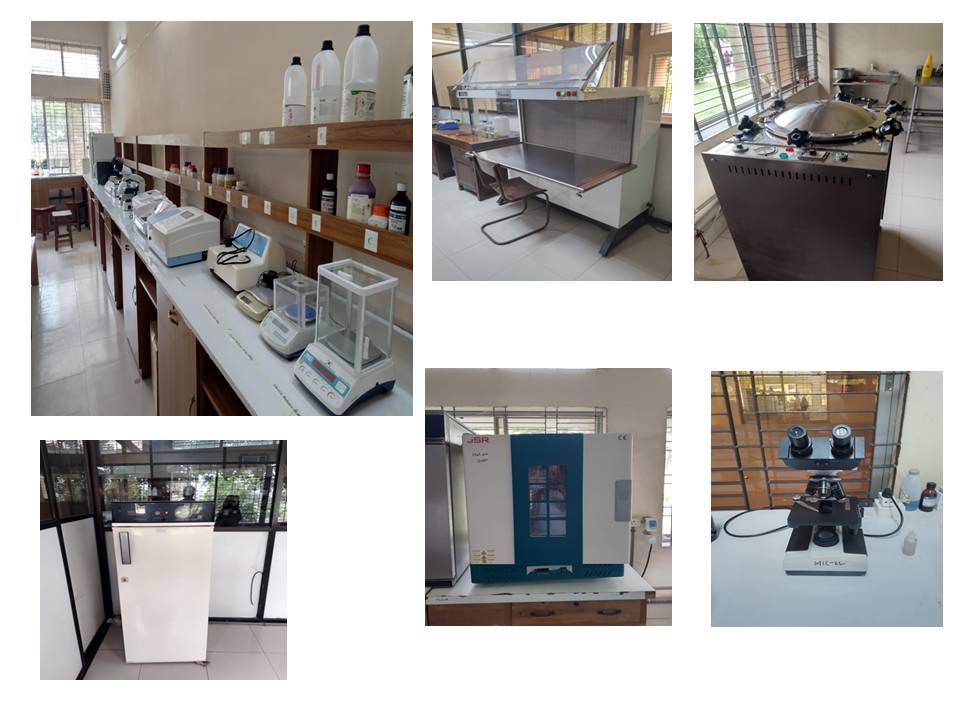
REPORT ON THE LABORATORY FACILITIES
OF THE
DEPARTMENT OF BIOCHEMISTRY AND MOLECULAR BIOLOGY, GONO BISHWABIDYALAY
1. Introduction
The Department of Biochemistry and Molecular Biology (BMB), Faculty of Health Sciences, Gono Bishwabidyalay, has established laboratory facilities to support undergraduate and postgraduate education, practical training, experimental learning, and research in biochemistry, molecular biology and related biomedical sciences.
The department is equipped with a range of conventional biochemical instruments, modern molecular biology equipment, analytical devices, and essential laboratory apparatus. In addition, the department has dedicated laboratory rooms, including air-conditioned spaces, a complete molecular biology laboratory with PCR facilities and a bioinformatics laboratory equipped with modern computers and relevant software.
These facilities provide a foundation for practical education, experimental research, student research projects, and the development of laboratory skills relevant to contemporary life sciences.
2. Laboratory Infrastructure and Physical Facilities
The department has multiple laboratory rooms with adequate space for practical classes, laboratory demonstrations, experimental activities, and research work. Several laboratory rooms are air-conditioned to support a suitable working environment for laboratory personnel, students, and sensitive equipment.
The university has three designated laboratory rooms associated with Biochemistry and Molecular Biology programme:
- Practical Laboratory Room 1: Approximately 1,200 square feet.
- Practical Laboratory Room 2: Approximately 1,480 square feet; shared facility.
- Practical Laboratory Room 3: Approximately 1,548 square feet.
These laboratory spaces support practical instruction and provide a physical foundation for expanding research-oriented activities.
3. Major Laboratory Instruments and Equipment
The department possesses a diverse range of laboratory instruments and apparatus for biochemical analysis, molecular biology experiments, sample preparation, microbiological procedures and general laboratory work.
3.1. Molecular Biology and Genetic Research Facilities
The department has a complete molecular biology laboratory with PCR facilities and equipment required for fundamental molecular biology experiments and research activities.
Major instruments and equipment include:
- Polymerase Chain Reaction (PCR) machine
- Gel electrophoresis systems
- UV transilluminator
- Micropipettes of different volume ranges
- High-speed centrifuge and microcentrifuge
- Laminar airflow cabinet
- Incubator
- Autoclave
- Refrigeration and ultra-low-temperature storage facilities
- Vortex mixer
- Magnetic stirrer
- Water bath
These facilities support practical training and research involving DNA amplification, electrophoretic analysis, sample preparation, molecular laboratory techniques, and the handling and preservation of biological samples.
3.2. Biochemistry and Analytical Laboratory Facilities
The department has instruments for biochemical analysis, quantitative measurements, sample processing, and routine laboratory experiments.
Available equipment includes:
- UV–Visible spectrophotometer
- Spectrophotometer
- ELISA reader
- Semi-automated analyzer
- Colorimeter
- pH meter
- Electric analytical/weighing balance
- Conductivity meter
- High-speed centrifuge
- Magnetic stirrer and hot plate
- Water bath
- Mechanical shaker
- Vortex mixer
- Soxhlet extraction apparatus
- Desiccator
These instruments support practical work and research involving biochemical estimation, protein and other biomolecule analysis, colorimetric measurements, immunoassays, solution preparation, extraction procedures and related analytical techniques.
3.3. General Laboratory and Sterilisation Facilities
The department has essential equipment for preparing laboratory materials, maintaining experimental conditions, sterilizing apparatus, and conducting routine laboratory procedures.
The available facilities include:
- Laminar airflow cabinet
- Autoclave and media autoclave machine
- Hot-air oven
- Incubator
- Refrigerator
- Ultra-low-temperature freezer (−20°C)
- Distilled-water and double-distilled-water systems
- Electric weighing balance
- Microscopes
- Glassware and general laboratory apparatus
These facilities are important for routine laboratory operations, media preparation, sterilization, sample storage, microscopy and the maintenance of appropriate experimental conditions.
3.4. Microscopy and Practical Laboratory Apparatus
The department also possesses microscopes and essential laboratory consumables and apparatus for practical classes and research activities.
The UGC inspection report documents the availability of:
- Light microscopes
- Volumetric and conical flasks
- Beakers of different capacities
- Measuring cylinders
- Burettes and pipettes
- Micropipettes and pipette fillers
- Test tubes and Petri dishes
- Glass slides and coverslips
- Separating funnels
- Filter paper and blotting paper
- Watch glasses and other routine laboratory accessories
These materials support practical instruction in biochemistry, molecular biology, analytical procedures, microscopy, and general experimental techniques.
4. Complete Molecular Biology Laboratory
The department has a complete molecular biology laboratory equipped with PCR facilities and associated instruments for molecular experimental work. The laboratory provides an environment for teaching and research involving DNA amplification, electrophoresis, sample preparation, and related molecular biology techniques.
The combination of PCR equipment, gel electrophoresis systems, micropipettes, centrifuges, refrigeration facilities, and other essential instruments provides a basis for molecular-level investigations.
Subject to the availability of appropriate reagents, validated protocols, trained personnel, and operational equipment, these facilities can support student research projects and further research development in molecular biology, biotechnology, biochemistry, and related biomedical disciplines.
5. Bioinformatics Laboratory
The department has a dedicated bioinformatics laboratory equipped with two modern computers and the necessary software for bioinformatics and computational biological analyses.
The laboratory is intended to support computer-based learning, research data analysis, biological sequence analysis, and computational approaches to contemporary life sciences.
The facility provides opportunities for students and researchers to develop skills in:
- Biological sequence analysis and sequence alignment
- DNA, RNA, and protein sequence analysis
- Database-based biological research
- Protein structure analysis and molecular modelling, where supported by the installed software
- Computational analysis of biological data
- Integration of experimental molecular biology with bioinformatics
- Research literature analysis and scientific data processing
The bioinformatics laboratory complements the department’s experimental facilities by providing opportunities to integrate laboratory-based investigations with computational approaches. This combination is increasingly important in modern molecular biology, genomics, proteomics, biotechnology, and biomedical research.
6. Research and Academic Applications
The combined laboratory and computational facilities provide a foundation for practical education, postgraduate research, and the development of research competencies among students.
The facilities may be utilized for the following academic and research activities, subject to equipment functionality, available resources, and appropriate laboratory protocols:
- Biochemical analysis and estimation of biological molecules.
- Molecular biology experiments involving PCR and gel electrophoresis.
- Sample preparation, centrifugation, sterilisation, and biological sample preservation.
- Microscopic examination and routine laboratory investigations.
- Analytical procedures using spectrophotometry, colorimetry, and ELISA.
- Student laboratory projects and postgraduate thesis research.
- Bioinformatics-based analysis of DNA, RNA, and protein sequences.
- Integration of experimental findings with computational biological analyses.
- Interdisciplinary research in biochemistry, molecular biology, biotechnology, microbiology, and biomedical sciences.
The availability of both experimental laboratory facilities and a bioinformatics laboratory provides an opportunity to strengthen research-based teaching and promote the integration of wet-laboratory and computational approaches.
7. Laboratory Safety, Maintenance, and Quality Assurance
The department recognizes the importance of laboratory safety, equipment maintenance and quality assurance in ensuring effective teaching and reliable research outcomes.
8. Conclusion
The Department of Biochemistry and Molecular Biology at Gono Bishwabidyalay has a broad range of laboratory facilities designed to support practical teaching, experimental learning, and research in biochemistry and molecular biology. Its infrastructure includes multiple laboratory rooms, essential biochemical and analytical instruments, molecular biology equipment with PCR facilities and a dedicated bioinformatics laboratory equipped with two modern computers and necessary software.
The combination of conventional laboratory apparatus, molecular biology instrumentation, analytical facilities, biological sample storage, and computational resources provides a foundation for contemporary life-sciences education and research.
With continued equipment maintenance, verification of operational readiness, appropriate technical support, and further development of research resources, the department can strengthen its capacity to deliver high-quality practical education and support advanced research activities in biochemistry, molecular biology, biotechnology, and related biomedical sciences.
